How to get into a flow state quickly

Flow arrives faster when the conditions are in place before you start. Pick one task that stretches you a little, write down what done looks like for the next block, remove every interruption and use the same short start ritual each time. Then protect the first 10 to 20 minutes, which is when focus is most fragile.
You cannot force flow, but you can make it far more likely. Researchers have spent decades on what has to be true before flow shows up, and most of it is within your control.
What a flow state is
Flow is the state of being so absorbed in a task that time seems to disappear. The psychologist Mihaly Csikszentmihalyi described it in the 1970s, and later research narrowed down three conditions that come before it: a balance between the challenge and your skill, clear goals, and clear feedback on how you are doing.
That gives you three dials. If you are drifting, the task is too easy, so add a constraint. If you are stuck, it is too hard, so cut off a smaller piece.
A 5-minute ritual to get into flow
- Empty your head. Spend two minutes writing down every unrelated task and worry so they stop pulling at your attention.
- Write one outcome sentence. Write what will exist at the end of this block, for example "draft the first two sections".
- Remove interruptions. Block distracting apps, close unneeded tabs and put your phone out of reach.
- Start your cue. Put on the same focus sound or playlist you always use for deep work.
- Take the smallest first step. Begin with an easy action, like opening the document and writing one rough line, to build momentum.
The ritual works partly because it is the same every time. Your brain learns that this sequence means deep work is starting, and settles faster each time you repeat it.
Use sound as your start cue
A consistent sound is one of the easiest cues to build. Pick one focus soundscape and play it only for deep work. After a few sessions, pressing play is enough to shift you toward focus.
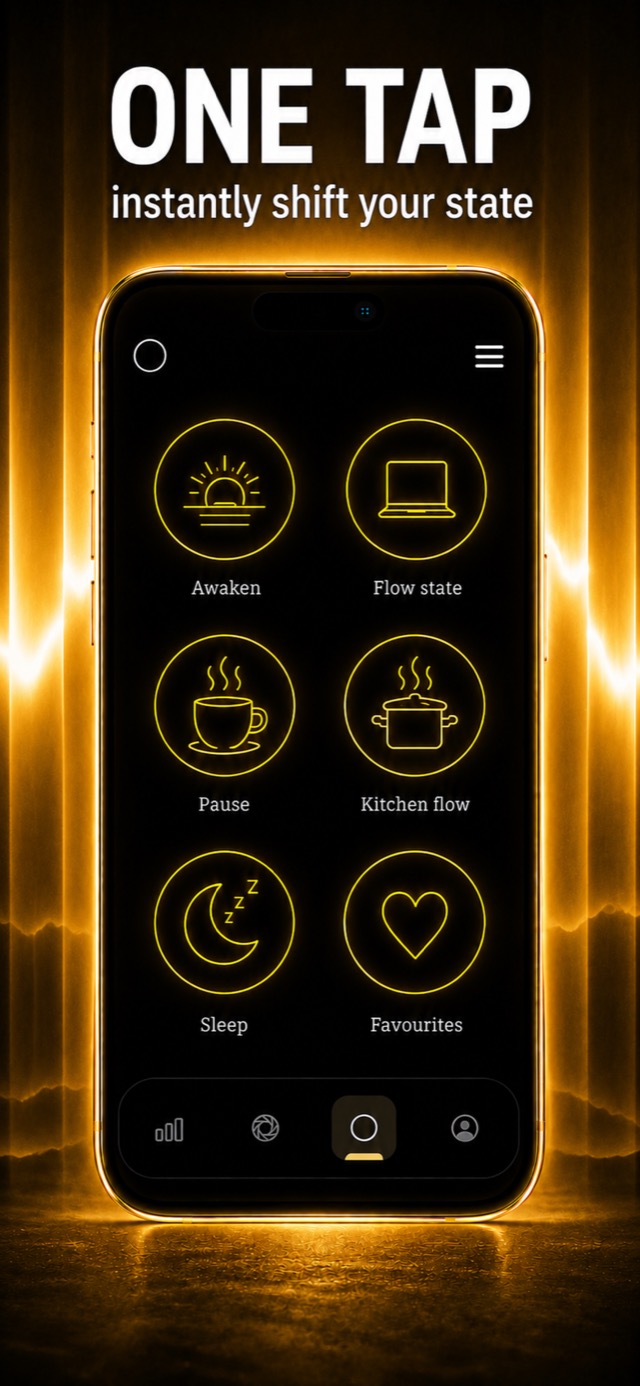
In Sanctum, the Flow state tile is one tap from the home screen. Set the focus timer for your block, block your feeds with the built-in app blocker, and start. Instrumental, lyric-free sound helps because nothing in it competes with the words in your head.
How long does it take to get into flow?
Often 10 to 20 minutes of uninterrupted work, which is why the start matters so much. The first stretch feels effortful and your attention wanders. That is normal, and it is not a sign the session has failed.
Interruptions cost more than the minutes they take. In one lab study, people interrupted every few minutes finished their work just as well but reported more stress, frustration and effort within 20 minutes. Protecting the start is how you skip that cost.
What breaks flow
- Notifications, even ones you do not open.
- A vague goal like "work on the report".
- Tasks far above or below your skill level.
- Checking email or messages "for a second".
- Music with lyrics while you work with words.
For more on choosing sounds, read the best sounds to focus while studying.
Frequently asked questions
How often can you get into a flow state?
Most people can manage one or two deep blocks a day, often in the morning when they are fresh. Trying to stay in flow all day usually backfires, so plan breaks between sessions.
Can music help you get into flow?
Yes, if it is steady and does not demand attention. Familiar instrumental music or ambient soundscapes work well, especially when you use the same sound every time so it becomes a cue for deep work.