The best sounds to focus while studying

The best sounds for studying are steady and have no lyrics: instrumental music, soft ambient soundscapes, or noise such as rain, pink noise or brown noise, played at a low volume. Lyrics compete with the words you are reading, so save songs for tasks that do not involve language. Try one sound for a week and compare it with silence on the same kind of work.
Background sound works best as a mask. It should cover the noisy room around you without asking for any of your attention.
Why lyrics make studying harder
Reading and listening to words use overlapping parts of your language system. In a study published in Applied Cognitive Psychology, students scored best on reading comprehension in silence or with instrumental music, and worst with music that had lyrics, even when it was music they liked.
Maths problems, drawing or tidying your notes are more forgiving. If you love working to songs, keep them for those tasks.
Study sounds compared
- Instrumental music: good for most study. Pick slower, familiar pieces so nothing grabs your attention.
- Ambient soundscapes: slowly changing textures with no melody to follow. Good for long reading sessions.
- White noise: masks chatter well but can sound harsh over hours.
- Pink and brown noise: deeper and softer than white noise, so easier to listen to for a long time.
- Nature sounds: rain and wind work well. Birdsong and thunder can be too eventful.
There is one interesting finding on noise. A 2024 meta-analysis found that white and pink noise gave a small benefit to young people with ADHD on lab tasks, and a slightly negative effect for people without ADHD. Treat any sound as something to test on yourself.
How to set up a study session with focus sounds
- Pick one task. Decide exactly what you will study in this block, for example one chapter or ten practice questions.
- Choose one sound. Pick a single lyric-free sound and keep it for the whole session.
- Set the volume low. Turn it down until it covers the room but you could still hear someone say your name.
- Block your phone. Put distracting apps on a block for the session so a notification cannot break it.
- Set a timer. Work for 25 to 50 minutes, then take a five to ten minute break away from screens.
Study with Sanctum
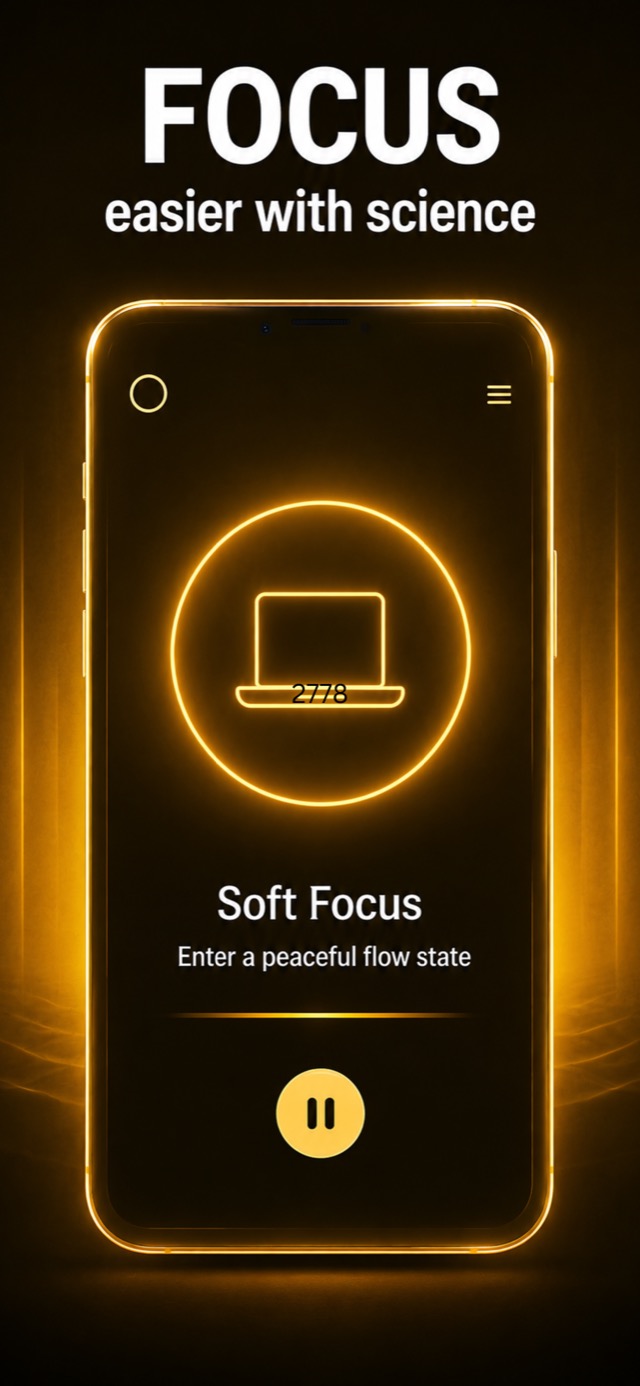
Sanctum's focus soundscapes are made for long, quiet work. Soft Focus and the Flow state tile play slow, lyric-free sound that sits behind your reading. A focus timer sets the length of each session, and there are no ads to cut in halfway through a chapter the way free video sites do.
You can download soundscapes for offline listening in the library, and the built-in app blocker keeps your feeds closed until the session is over.
How loud should study music be?
Quieter than you think. Background sound should mask a noisy room and stay out of the way of your thinking. A good test: if you could not hear someone say your name across the room, it is too loud. Keeping the volume low also protects your hearing during long sessions with headphones.
If you are struggling to get started at all, the sound may not be the problem. See how to get into a flow state quickly.
Frequently asked questions
Is it better to study in silence or with music?
For reading and memorising, silence or instrumental music usually works best. Steady background sound helps most when your surroundings are noisy, because it covers chatter and sudden sounds that would otherwise break your concentration.
How long should a study session with focus music last?
Most people do well with blocks of 25 to 50 minutes followed by a short break away from screens. Keep the same sound for the whole block so your brain is not reacting to new tracks.