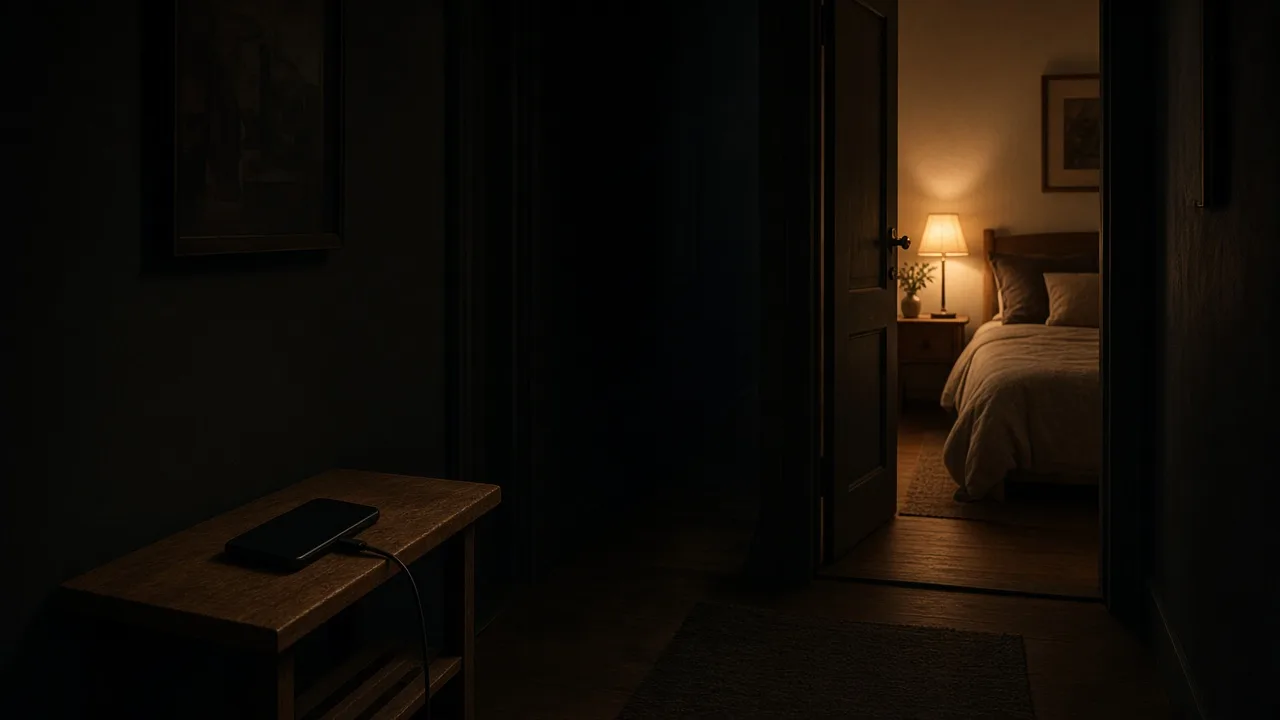
How to calm down after overstimulation
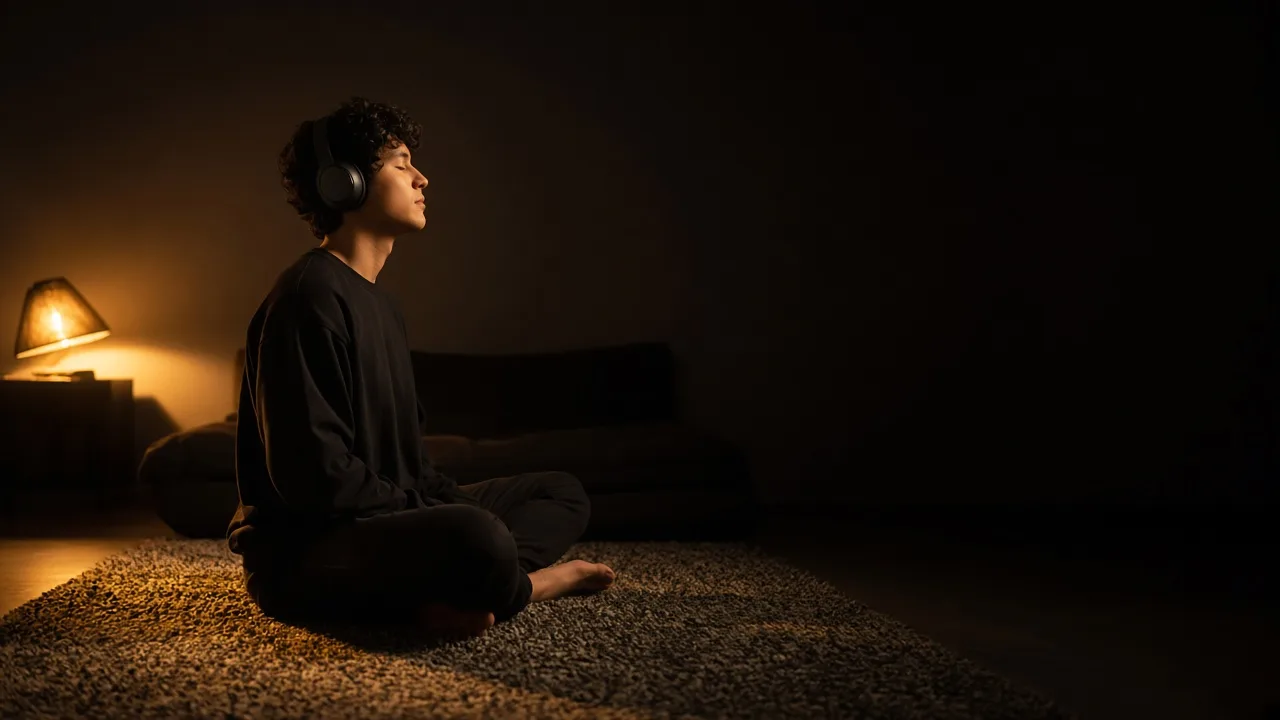
To calm down after overstimulation, cut the input first and then give your nervous system one slow, steady signal. Put the phone face down or in another room, dim the lights, breathe with a longer exhale for a few minutes (in for four counts, out for six) and listen to one low, steady sound with your eyes closed. Most people feel the edge come off within about ten minutes.
Overstimulation is what happens when input arrives faster than your brain can process it: alerts, bright colours, noise and constant switching between apps. You end up wired and tired at the same time.
Signs you are overstimulated
- An urge to keep switching apps even though nothing is urgent.
- Irritability, a tight jaw or restless energy.
- Trouble starting a slower task such as reading or cooking.
- Silence feels uncomfortable for the first few minutes.
These signs often show up after a long scroll session, a day of video calls or a loud, busy environment. They are common and usually temporary.
Why reaching for your phone makes it worse
When you feel frazzled, the phone feels like relief because it is familiar. But it only swaps one stream of input for another. Simply Psychology's guide to adult overstimulation puts it well: the feed is just a different kind of noise. The same guide calls sound the highest-yield channel to calm for most adults.
A 10-minute overstimulation reset
- Cut the feed. Lock your phone and put it face down or in another room for at least ten minutes.
- Lower the light. Dim the lights or move somewhere darker. Close your eyes if you can.
- Lengthen your exhale. Breathe in for four counts and out for six, for two to three minutes.
- Play one steady sound. Listen to a single calm, continuous sound at low volume instead of music with words or changes.
- Choose one next step. Before picking the phone back up, decide on one small, offline thing to do next, like drinking water or starting the dishes.
Order matters. Reduce input before adding anything calming, otherwise the calm sound is fighting the notifications.
Why one steady sound helps you calm down
A predictable sound gives your attention a single place to land. It also masks sudden noises like doors, traffic or voices, which keep a stressed nervous system on alert. Low, warm, slowly changing sounds work better here than music with lyrics or sharp rhythms.
If silence makes you more anxious, start with soft continuous sound and add breathing once the spike settles. There is no single right method, only the one that brings you down.
Use Sanctum for overstimulation recovery
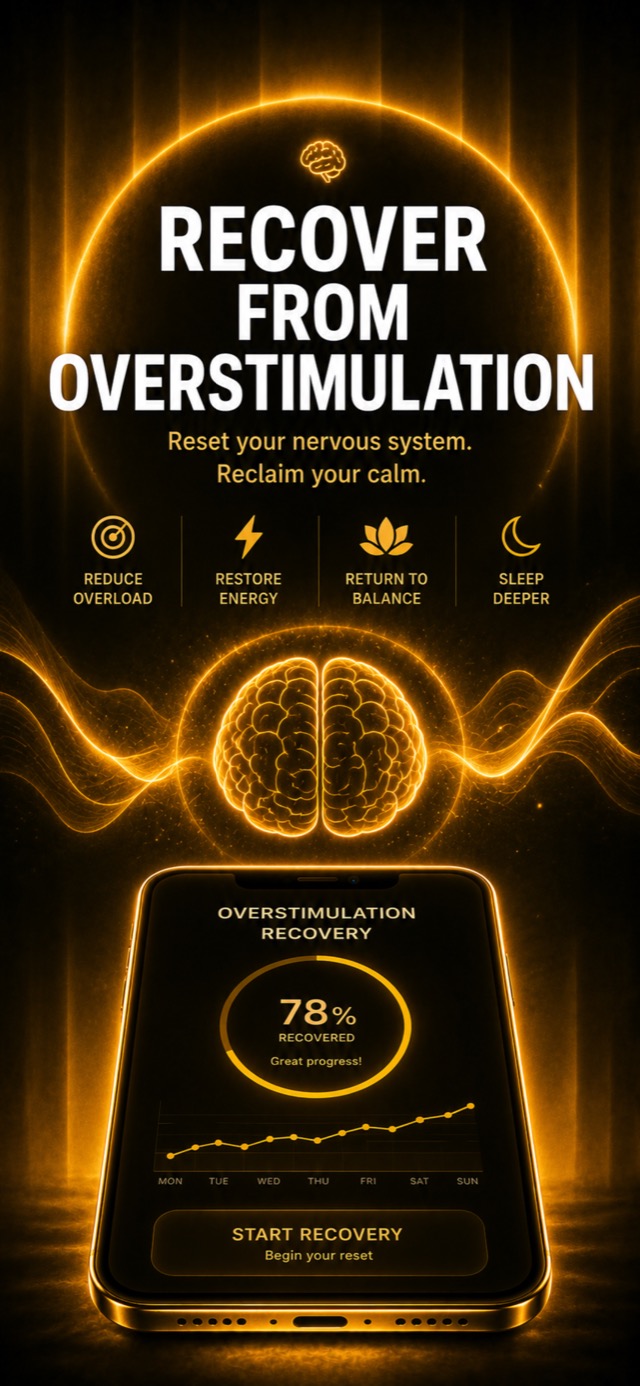
Sanctum has sessions made for this moment. Tap Pause on the home grid for a short reset, or start an overstimulation recovery session when you have had too much screen, noise or people. The sound is slow and warm, and the screen stays almost empty so nothing pulls you back into tapping.
To stop the next spike, block the apps that tipped you over with Sanctum's app blocker for the rest of the evening.
How to prevent overstimulation
- Batch notifications with a Focus mode during work and after dinner.
- Plan a low-input evening after a high-input day.
- Do one media task at a time instead of watching, scrolling and messaging together.
- Take short screen-free breaks before you feel drained.
If sensory overload is frequent, severe or getting worse, talk to a doctor. Anxiety, migraine, hearing problems and neurodivergence can all play a part. For a longer-term plan, read how to reverse brain rot.
Frequently asked questions
Why do I feel overstimulated after scrolling?
Fast feeds pack constant change into every second: new faces, sounds, colours and ideas. Your brain keeps reacting to each one, so you can finish a scroll session feeling both wired and drained even though you were sitting still.
Is silence or sound better when you are overstimulated?
Both can work. Silence is ideal if you can tolerate it, but many people find it uncomfortable at first. A soft, steady sound at low volume is a good bridge, and you can turn it off once you feel settled.